 RSS Feed
- Empty Cart
Subtotal:
$0.00

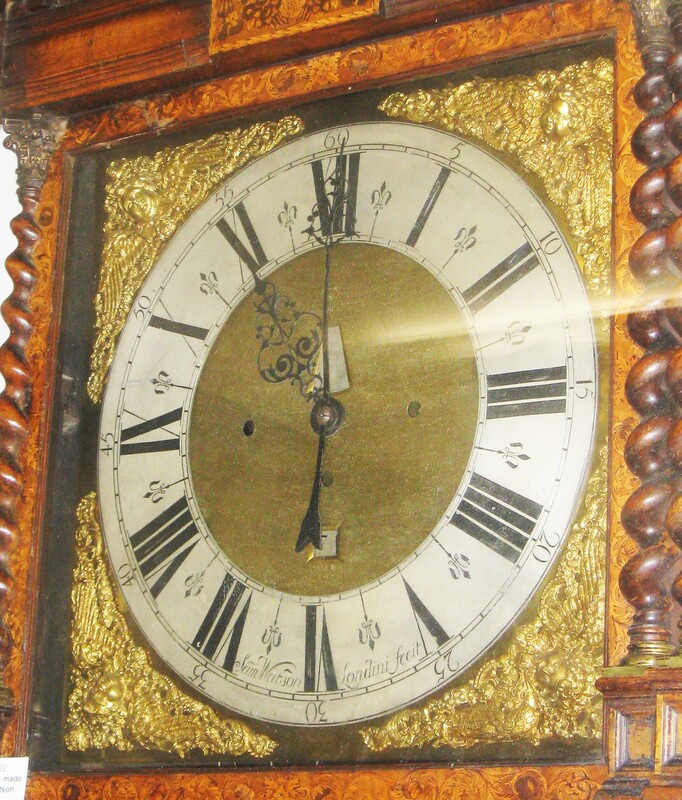
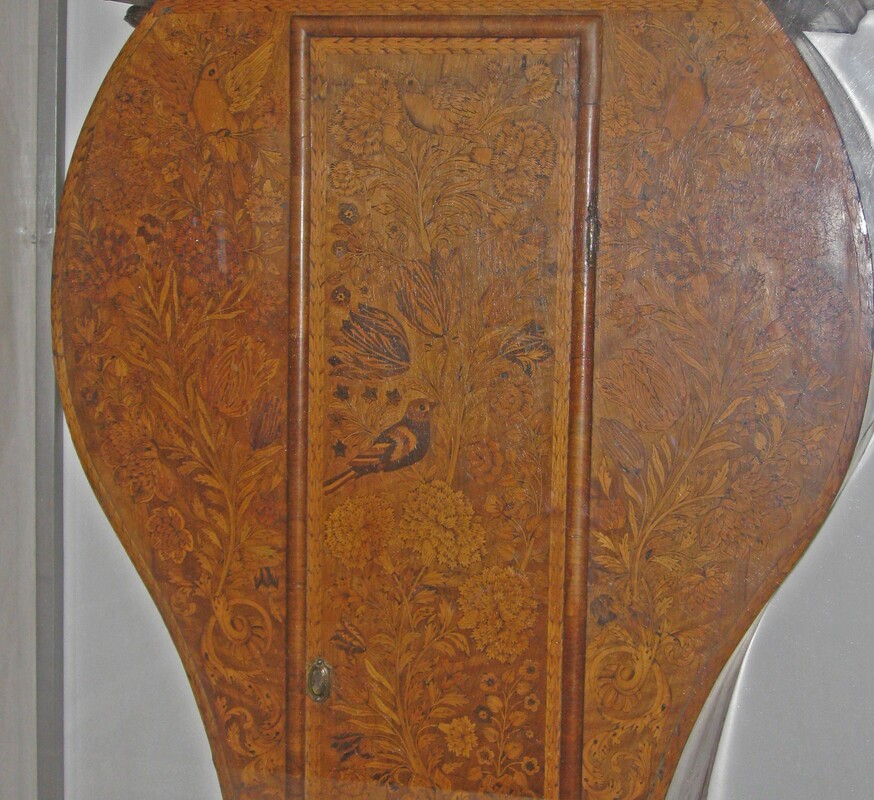
The unwanted Dutch-style, case was given a 20” square dial with an 8-day
movement by Watson and is thought to be the one displayed at the
Herbert Art Gallery and Museum, Coventry (see figs. 1 - 3). 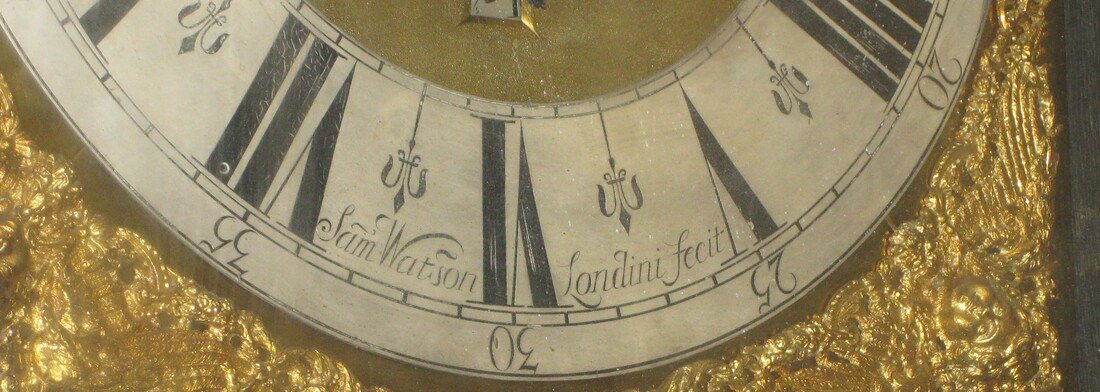 Fig 2: H
Alan Lloyd described the Windsor, astronomical clock in an article he
wrote for the Horological Journal in December 1942. The same writer
wrote an article for the same journal in December 1948 about the two
astronomical clocks Watson made for Sir Isaac Newton and are now in the
possession of the Clockmakers’ Company. Mr Lloyd knew very little about the clockmaker’s life and origins but he greatly admired his work and thought he was among the finest clockmakers to have worked in this country. With the help of Mr Philip Southall, we have been able to piece together more information about this extremely talented clockmaker and mathematician. Samuel Watson was baptised at Kingsbury, War, sixteen miles north west of Coventry, on 15 Feb. 1650/51, son of Samuel and Sibbell Watson. Samuel junior would have been apprenticed, possibly in Coventry from 1664-1671. He married Elizabeth Milburn at Holy Trinity Church, Coventry on 8 April 1672. No children are recorded for the couple so that Watson may have worked elsewhere before 1682 when a son Samuel was baptised at St Michaels Church, Coventry on 1 June 1682.
Samuel
Watson joined the C.C. as a brother on 29 Sept 1690 and had set up his
business in Long Acre, where he is recorded paying water rates for 1692.
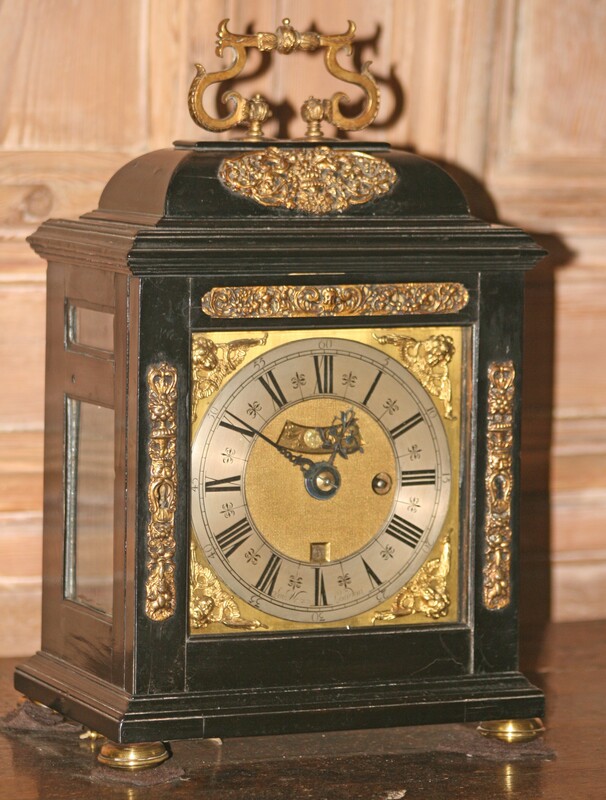
Watson was the leading astronomical clockmaker at the end of 17th
century but he did make other clocks, including fine tables clock (see
fig 4). He seemed to specialise in table (spring) clocks but he did make
some longcase clocks and a number of watches. One of Watson’s table
clocks was stolen and advertised in the London Gazette of 27 July 1696:- “Lost
16the June out of a House near Red Lion Square a Repeating Table Clock
in black Ebony Case and Cap, with Brass Furnature upon it, showing the
hour and minutes, striking at the end of every hour and repeating the
quarters upon two bells when pulled; having two Pendulums, a longer that
moves behind, and shorter that moves in semi-circle on the upper part
of the Dial Plate; the back Plate is engraved Samuel Watson London.
Whoever gives notice of the said Clock to Sam Watson, watchmaker, near
the Bagnio in Long Acre, so as it may be had again shall have two
Guineas Reward.” Samuel Watson’s daughter, Louis married the clockmaker William Threlkeld, of the Strand, on 14 Feb 1705/6 and their son William was baptised on the same day. Louis must have died young because Threlkeld married her sister Lydie on 28 May 1712 at St Martins in the Fields, Westminster. Another son William was baptised on 23 Feb 1714/5. Samuel Watson’s wife Elizabeth died and was buried at St Mary le Strand Church on 13th April 1707 and Samuel returned to Coventry about 1715.
Watson returned to Coventry soon after this incident and did make a few
clocks and watches there. He remarried in Coventry to Dinah and they had
a son William who was buried 30 May 1717 and Samuel died and was buried
on 4 Feb 1722/3. Samuel junior worked in Coventry but it is not known
if he was a clockmaker; he was buried on the 19 Apr 1740. If you would like to find out more about Samuel Watson or other leading London Clockmakers, please consider purchasing a copy of my latest book, Early Clock and Watchmakers of the Blacksmiths' Company.
0 Comments
Comments are closed. |
AuthorKeith Bates is an amateur horologist who has been researching clocks, watches and chronometers and their makers for over 30 years. Archives
August 2023
Categories
All
|