 RSS Feed
- Empty Cart
Subtotal:
$0.00

|
After
a disastrous fire in 1834 the Palace of Westminster had to be rebuilt
to include the two Houses of Parliament. The architect Sir Charles Barry
was commissioned to design a new building and he approached the
distinguished clockmaker Benjamin Louis Vulliamy,
clockmaker to the Queen, to provide a specification for a new clock. He
wanted to build the clock but there were other clockmakers who were
interested in providing a suitable clock. The Astronomer Royal, Sir
George Airy was asked to provide the parameters for the new clock. He
said that it should be capable of keeping time within one minute a week
and the first stroke of the hour was to be within a second of true time.
Vulliamy did not think this was possible with the extreme weather and
wind variations on the clock hands so he pulled out. E. J. Dent was chosen to make the clock to the specification of Edmond Beckett Denison M.A. Q.C. Denison (b.1816) was a leading barrister who had written a book in 1850 about “Clocks, Watches and Bells”, elected President of the British Horological Institute in 1868; succeeded his father as Sir Edmund Beckett in 1874; created Baron Grimthorpe in 1886 and died in 1905. In the revised and enlarged sixth edition of his book published in 1874 he describes how and why all the parts of the Westminster clock were produced and how he played a major role in its production. The Frontis piece of the book (figure1) is a large drawing of the clock movement entitled “THE GREAT WESTMINSTER CLOCK”. 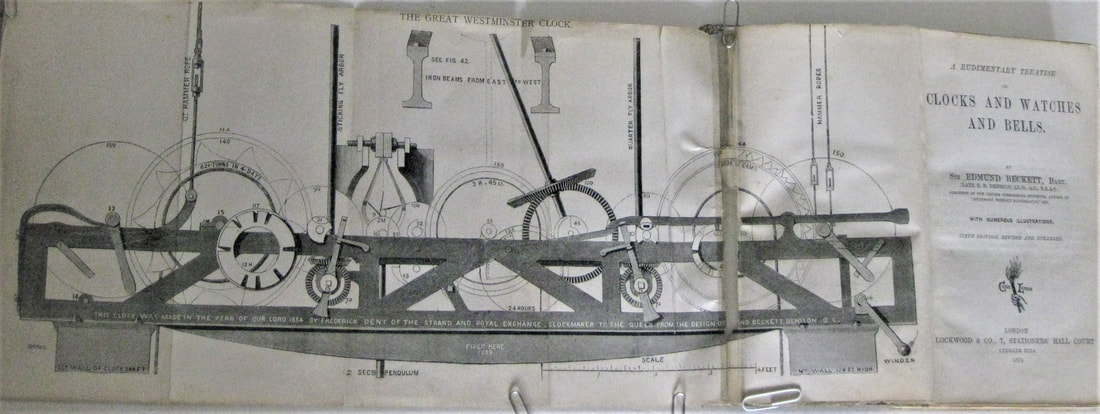 Fig. 1: Frontis of book "Clocks, Watches and Bells" 1850. Edmund Beckett Dennison Sir
Edmund explains the circumstances in 1852 when the Dents were given the
contract to make the clock “I say ‘we’ because from the time when the
Westminster clock was begun in 1852, in consequence of the failing
health, first of E. J. Dent
(died March 1853), and afterwards of his stepson and successor, F.
Dent, I managed their clock factory, in all but pecuniary matters, and
designed every important piece of clockwork that was done there until F.
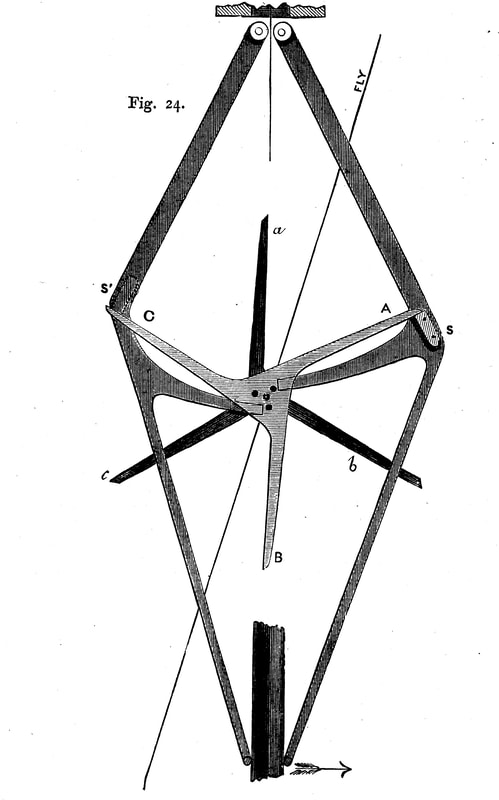
Dent’s death in 1860.” The most important feature of the Westminster Clock is the use of the double three-legged gravity escapement (figure 2).
Lord
Grimthorpe also designed the great clock for St Paul’s Cathedral which
was made by John Smith and Sons of Derby in 1893 and has many
similarities with the Westminster clock, including a 19 feet flatbed
frame, a double three-legged gravity escapement and has three 17 feet
dials. This clock is now electrically controlled and has automatic
winding.
Find out more about Early Clock and watchmakers of London and the North East of England in my book Early Clock and Watchmakers of the Blacksmiths' Company. Find out more about the life and work of Edward J Dent and his stepson F Dent.
0 Comments
Comments are closed. |
AuthorKeith Bates is an amateur horologist who has been researching clocks, watches and chronometers and their makers for over 30 years. Archives
August 2023
Categories
All
|